
The podcasting landscape is evolving fast. What began as a space for hobbyists and amateurs is now crowded with influencers, celebrity hosts, and high-tech video production. Even Netflix is exploring a move into podcasts. But amid all this growth, one question remains: is video taking over, or does audio still come out on top?
Few shows illustrate this debate better than The Joe Rogan Experience. What began as a purely audio podcast has grown into a multimedia phenomenon, drawing 6.5 million monthly listeners whilst also capturing 2.5 million monthly video viewers. Whilst audio is still generating stronger engagement, in this case, the rapid increase of video views presents a growing challenge to audio’s dominance.
The History of the Pod
Podcasting can be traced back to the beginning of the 21st century. In 2000, the MP3 player manufacturer MyAudioGo.com allowed users to upload news stories to its servers and download them onto MP3 players. Although the company quickly went bust, it sparked early conversations about portable listening. Things got truly interesting in 2003, when software engineer Dave Winer developed an audio RSS feed for former New York Times reporter and public radio host Christopher Lydon. Using this new technology, Lydon began sharing audio interviews on his blog, a format that would soon be called “podcast” – a combination of “iPod” and “broadcast”.
By the end of 2004, the first podcast hosting platform, Libsyn, launched, and in 2005 Steve Jobs embraced podcasting by integrating subscriptions into iTunes. That same year, the term “podcast” was declared Word of the Year by the New Oxford American Dictionary. Today, podcasts like The Daily from The New York Times continue this tradition, reaching an estimated 11 million monthly listeners, showing the enduring appeal of audio-first storytelling.
Fast forward to 2014, the true crime sensation Serial became the first podcast to reach five million downloads on iTunes, proving the medium could reach massive audiences. Mobile technologies further transformed podcasting, allowing listeners to engage anywhere, whilst headphones added a uniquely immersive experience. As social media rose, creators began experimenting with video podcasts, with YouTube becoming the leading platform for discovery. Yet despite these innovations, audio podcasts continue to offer something video simply cannot: intimacy. From their earliest days, podcasts have allowed creators to share ideas and stories directly with listeners, creating a personal connection that remains at the heart of the medium.
Looking at the Stats
Bringing audio and video podcast statistics together reveals just how far the medium has come. In 2025, an estimated 584 million people worldwide listen to podcasts – a number projected to rise to nearly 652 million by 2027. That’s an increase of more than 67 million listeners in just two years, a figure that speaks to the growing cultural and commercial power of podcasts. What began as a niche form of on-demand audio has evolved into one of the most influential and accessible media formats in the world, bridging the gap between entertainment, education, and conversation.
Listeners and viewers
Having explored the global reach of podcasting, it’s time to look closer at how this translates into platform engagement. By comparing the top ten audio-reach podcasts with the top ten video-reach podcasts, we can begin to see how audience habits are diverging – and where listeners are choosing sound over screen, or vice versa.
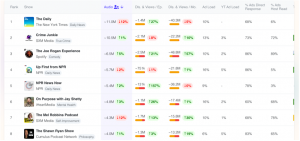
Audio continues to dominate overall engagement, with flagship shows like The Joe Rogan Experience (6.5M monthly audio listeners) leading the field. Although the podcast is available in both audio and video formats, it draws most of its audience from its audio roots. Similarly, top-ranking shows such as The Daily and Crime Junkie remain audio-first, attracting 11 million and 10.5 million listeners respectively. Growth for audio podcasts is steady and sustainable, typically ranging from +4% – 10%, indicating a mature yet still expanding audience. Even though Joe’s podcast comes in both audio and video formats, it gains the most engagement from its audio origin. Moving on, many top-ranking shows including The Daily and Crime Junkie remain audio-first and have views of 11 million and 10.5 million.
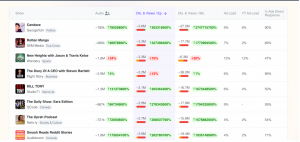
In contrast, video podcasts are seeing sharp growth, driven by strong engagement on visual platforms like YouTube. For instance, the Joe Rogan Experience has recorded a 21% increase in monthly video views, significantly outpacing its audio growth of 5% and underscoring the show’s expanding visual footprint. Several other top-ranking podcasts have experienced even more dramatic gains, with monthly views surging over +100% for certain titles. Whilst overall audience size for video formats remains smaller than their audio-first counterparts, the rapid growth highlights the increasing importance of visual content and the potential for shows to reach new viewers through compelling video experiences.
Overall, audio continues to maintain the largest and most stable audience, whilst video is growing more rapidly in percentage terms but from a smaller base. Rather than replacing audio, video is largely supplementing it, with nearly every video podcast still relying on its audio-only content to reach listeners. The data underscores audio’s enduring strengths – its accessibility, flexibility, and established engagement – ensuring it remains the dominant format even as video increasingly adds a visual dimension to the podcast landscape.
Genres
Turning to genre preferences reveals some interesting patterns. Certain podcast topics appear to align more strongly with either audio or video formats. News podcasts, for instance, remain predominantly audio only. Most listeners consume news on the go -during commutes, while cooking, or doing household chores – making audio the ideal format for staying informed without needing to watch a screen. Similarly, true crime podcasts tend to favour audio, with a common place to listen being the gym, as well as during other on-the-move activities like commuting, cooking, or cleaning. Comedy and celebrity-focused podcasts, by contrast, often thrive in video formats. Visual elements – facial expressions, host-guest interactions, and set design – enhance enjoyment and engagement. Popular shows like Call Her Daddy and the Saving Grace demonstrate this trend, appealing to younger audiences who value the dynamic and social nature of video content. Overall, these patterns suggest that audio and video serve complementary roles. Most video podcasts continue to offer an audio version, catering to traditional listening habits, while genre considerations often dictate which format resonates most with audiences. Video excels where visual connection amplifies content, while audio dominates in contexts which prioritise convenience and mobility.
Why video podcasts?
The rise of video podcasts naturally leads to the question: what makes the visual element so appealing? As more creators adopt video and more audiences choose to watch rather than just listen, it becomes important to understand what this shift represents for the medium. Video podcasting enriches the experience, offering visual cues and on-screen dynamics which enhance storytelling and audience engagement. By allowing audiences to read facial expressions and body language, and to observe the subtle reactions between hosts and guests, it provides a deeper understanding of a speaker’s intent and emotional nuance. This added layer of connection enables audiences to feel more immersed in the conversation, strengthening their sense of presence and deepening their relationship with the content. This shift also reflects the preference of a new generation: 84% of Gen Z monthly podcast listeners report consuming podcasts which include a video component. Growing up with short, visually stimulating content on platforms like TikTok, younger audiences are accustomed to media that delivers quick, engaging hits. Video podcasts cater to this demand, offering a unique hybrid space – they can be consumed passively, with the video playing in the background, or actively, for a richer, more engaging experience, providing listeners with unparalleled flexibility. At the same time, this trend raises a broader question: are shrinking attention spans driving our preference for instant gratification and distraction, making the option to watch or listen simultaneously increasingly appealing?
Video podcasting is also becoming more attractive to creators, with discoverability easier than ever through platforms like TikTok, YouTube, and Instagram Reels. A short clip from a podcast can reach millions via For You Pages or recommended video feeds, giving creators a chance to go ‘viral’ and engage audiences quickly. However, when it comes to monetisation, audio remains the stronger performer. Seamlessly integrating ads into an audio story feels more natural than interrupting a video with commercial content, making in-podcast advertising more effective. In this respect, video may boost discoverability, but audio remains stronger for monetisation.
Why audio podcasts?
While video podcasting provides a level of connection that audio cannot, audio podcasting offers a type of intimacy that visuals struggle to replicate. Listeners can develop a personal bond with the creator’s voice, their storytelling, and the worlds they evoke in the imagination. This creates a rich auditory experience that encourages long-term listening loyalty. As Spotify noted in their review, “audio is by nature an especially intimate form of communication”, emphasising how the absence of visuals allows the listener’s imagination to engage, filling in the spaces between words and fostering a unique sense of intimacy with the host. Alongside this, audio podcasts are particularly well-suited to auditory learners who prefer to absorb information by listening. They also offer a level of flexibility which other forms of media cannot. People can tune in during screen-free moments – working out, cooking, cleaning, or commuting – when visual media cannot reach them as easily. Moreover, listeners can multitask while listening. For instance, a Spotify poll found that one in three respondents listen to podcasts specifically because they are screenless, with 35% streaming during commuting hours. This on-demand and flexible nature allows podcasts to fulfil their original purpose: providing niche, genre-based content that can be consumed on the move.
Podcasts have also proven useful for education and professional development. Healthcare professionals, for example, increasingly use podcasts as a convenient way to stay informed and up to date while commuting. Covering news, discussion, and informational content, podcasts provide a practical alternative for busy professionals who might struggle to attend conferences or courses in person, highlighting the medium’s unique combination of accessibility and learning potential.
Turning to monetisation, audio podcasts generally outperform video in in-podcast revenue. Studies show that 81% of listeners have taken action after hearing an audio ad within a podcast – a significantly higher proportion than for video. While audio podcasts may take slightly longer to gain traction, once established they foster enduring connections with listeners and generate strong revenue streams. Podcasts such as The Joe Rogan Experience illustrate this balance perfectly: the show built a loyal fan based through audio before introducing a video component, which then attracted new viewers while allowing audiences to choose whether to watch or simply listen.
Tying it all together
Considering the strengths and limitations of both audio and video podcasts, it becomes clear that determining which is “better” is largely a matter of perspective. Video podcasts can enhance the listening experience, offering a different form of communication through facial expressions, body language, and on-screen dynamics. Audio, by contrast, provides a more intimate connection, allowing for screen-free entertainment – a quality that may be increasingly valuable in a society facing shortening attention spans.
From this standpoint, audio often appears to hold the upper hand due to its unparalleled accessibility and ability to engage the imagination. Listeners can tune in whilst commuting, exercising, or working, letting their minds create the scenes and stories conveyed through sound alone. Video, meanwhile, is rapidly growing in popularity, offering visual engagement, a sense of familiarity, and interactive appeal. In this sense, audio and video are not directly comparable; each serves a distinct role within the media landscape. That said, audio remains foundational. It established the podcasting medium, and even video podcasts rely on strong audio content to connect with audience effectively. Ultimately, while both formats have their place, audio continues to maintain a lasting advantage in accessibility, intimacy, and listener engagement.
Discover our podcast studios at Chatterbox Audio
Looking to start recording your new podcast, or move locations to a new podcasting studio? Here at Chatterbox, we have two different location options for you, both of which prioritise the quality of the spoken word.
Our podcast studio on Caledonian Road, London
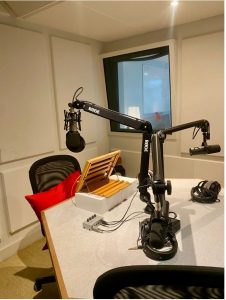
Our Caledonian Road studio comfortably accommodates up to three in-person podcasters, arranged around a large, communal table that encourages natural interaction between narrators. We can also support remote guests joining your recording, ensuring seamless collaboration no matter where participants are located. The space itself is warm and inviting, designed to encourage creativity, conversation, and a relaxed atmosphere for every recording session.
Our podcast studio in Wheal Kitty, Cornwall
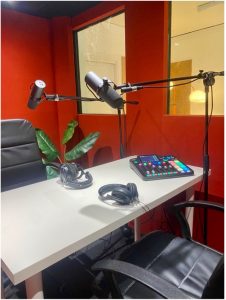
Our Cornwall podcast studio is designed for up to two in-person narrators, providing a cosy and intimate setup that encourages natural conversation and collaboration. We also offer full support for remote guests, allowing them to join your recording seamlessly from anywhere. The space is thoughtfully arranged to create a relaxed and welcoming environment, with all the equipment and acoustics you need for a professional-quality podcast, whether you’re hosting a casual chat or a highly produced session.
Other Podcasting needs
Already recorded your podcast but need help producing and editing the audio into a seamless podcast? We have you covered, contact hello@chatterboxaudio.com to discover the other ways we can help bring your project to life.
We hope you enjoyed reading this insight post, see you soon for our next one,
The Chatterbox Team
References:
- Berry, R., 2024. We hardly need to use our ears: Video, audio and the shaping of the podcast medium in the 2020s. Radio Journal: International Studies in Broadcast & Audio Media, 22(2), pp.145-162.
- Kaiser, S., 2025. Who Gets Heard? How Discovery Systems Shape Podcast Visibility.
- Podscribe (2025). Podscribe. [online] Podscribe. Available at: https://podscribe.com/podcast-rankings [Accessed 13 Nov. 2025].
- Gibson, E.D. (2024). Why Podcasts are Dominating the Media Landscape: Audio vs. Video and What it Means for Creators. [online] Medium. Available at: https://deconch30.medium.com/why-podcasts-are-dominating-the-media-landscape-audio-vs-video-and-what-it-means-for-creators-9274c8aa361e.
- Kiernan, M.A., Mitchell, B.G. and Russo, P.L. (2023). The power of podcasts: Exploring the endless possibilities of audio education and information in medicine, healthcare epidemiology, and antimicrobial stewardship. National Library of Medicine, 3(1). doi:https://doi.org/10.1017/ash.2023.178.
- Leu, P. and Text, S.C.D.M. up-to-Date D.T.R. in the (2025). Topic: Podcasting worldwide. [online] Statista. Available at: https://www.statista.com/topics/7662/podcasting-worldwide/#topicOverview.
- Shah, K. (2025). Are podcasts going visual? [online] Yougov.com. Available at: http://yougov.com/en-gb/articles/52585-are-podcasts-going-visual?utm_source=chatgpt.com.
- Son, M. (2023). The Complete History of Podcasts | Descript. [online] www.descript.com. Available at: https://www.descript.com/blog/article/history-of-podcasts.
- Spotify (2018). Podcasts and the attention sweet spot | Spotify Advertising. [online] Spotify.com. Available at: https://ads.spotify.com/en-NL/news-and-insights/podcasts-and-the-attention-sweet-spot/.
- Williams, A., 2025. Radio, Podcasts and Television. Media History in Canada.
- Wyatt, S. (2025). Wyatt Matters. [online] Wyatt Matters. Available at: https://www.wyattmattersshow.com/video-podcast-vs-audio-podcast/.